Peptide fragments
Short sequences taken from larger proteins and studied for their activity in isolation. Every batch carries an independent HPLC purity and LC-MS identity certificate.
About this class
Fragments are among the most widely discussed peptides in the research catalogue, and also among those where the gap between the literature and the marketing is widest. Each is a short, unmodified or lightly modified sequence, readily soluble in water, with none of the lipid chains of the incretin analogues.
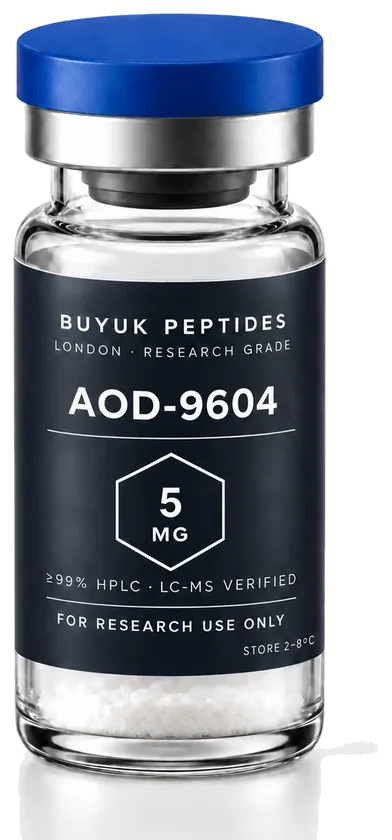
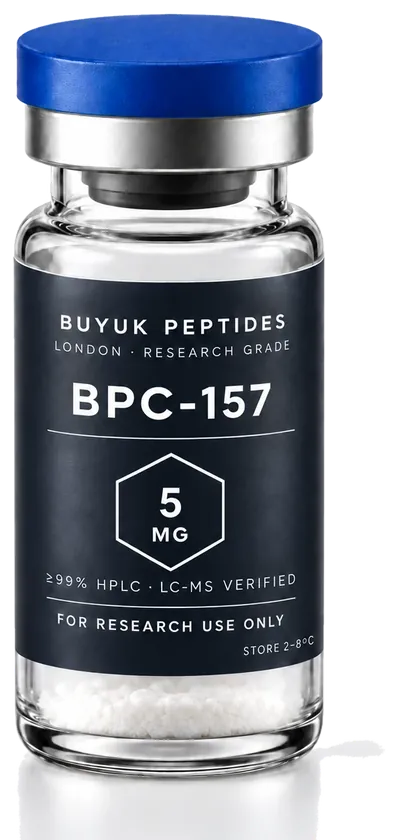
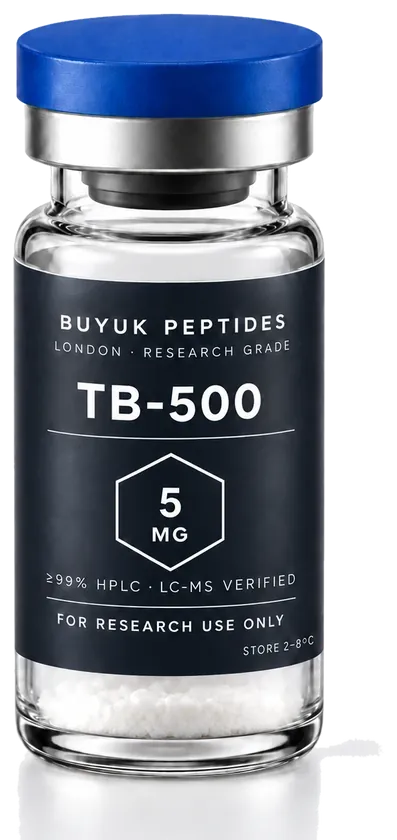
BPC-157 is a 15-residue sequence with a large but largely single-group animal literature. TB-500 is the actin-binding motif of thymosin beta-4, a fragment with a small literature of its own inside a much larger one on the parent protein. AOD-9604 is a modified fragment of the C-terminus of human growth hormone, studied for lipolytic activity.
The two most often ordered together are compared in BPC-157 vs TB-500, which is frank about the shape of each evidence base. All are supplied as lyophilised research chemicals for in-vitro laboratory use only.
Questions
What is a peptide fragment?
A short synthetic sequence corresponding to part of a larger protein, chosen because research mapped a particular activity to that region. TB-500 is residues 17 to 23 of thymosin beta-4, AOD-9604 is a modified C-terminal fragment of growth hormone, and BPC-157 is described as a fragment of a gastric protein.
Why does the mass on the certificate matter for fragments?
Because it distinguishes the fragment from its parent. TB-500 has a mass of about 889 Da; full-length thymosin beta-4 is about 4,963 Da. A certificate that shows the expected fragment mass confirms you have the sequence you ordered.