from£41.00View
Research class
Incretin & amylin analogues
Lipidated peptides built on GLP-1, GIP, glucagon and amylin, studied for receptor pharmacology and metabolic signalling. Every batch carries an independent HPLC purity and LC-MS identity certificate.
About this class
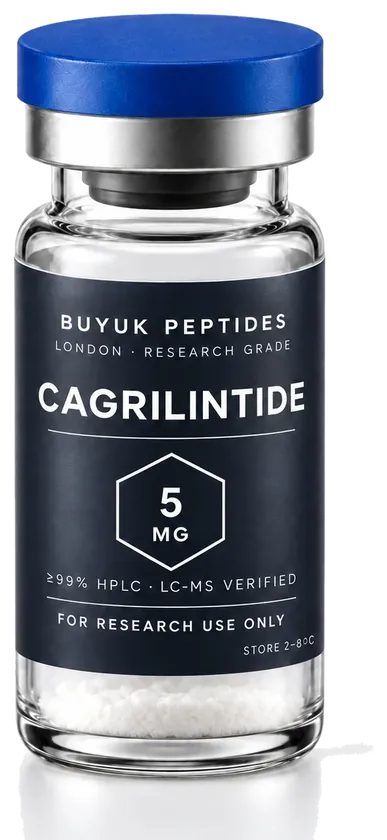
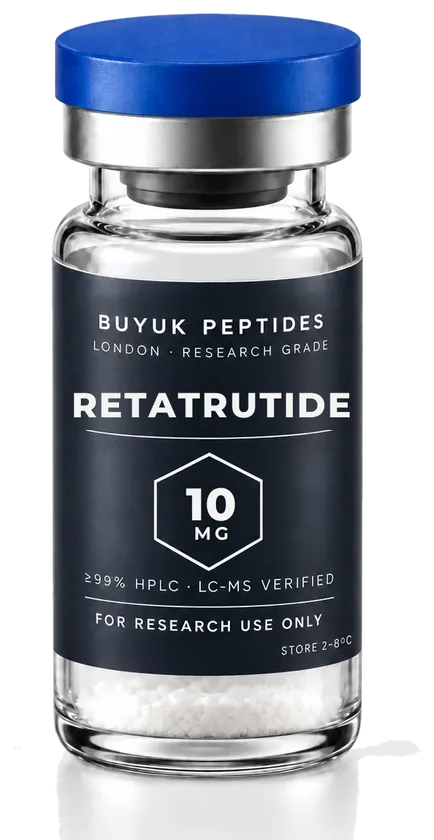
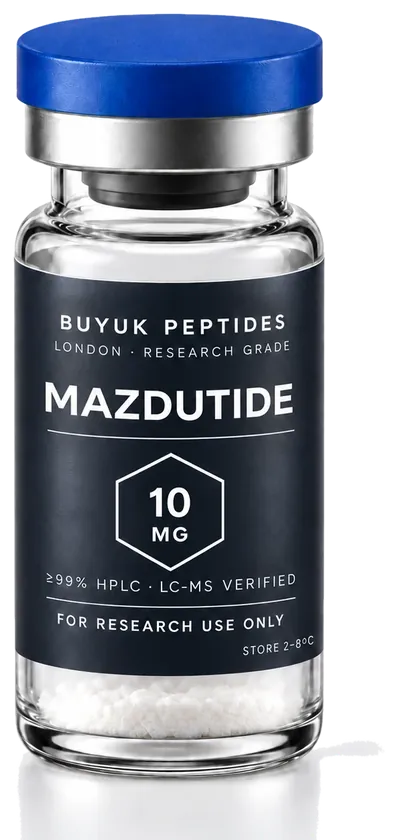
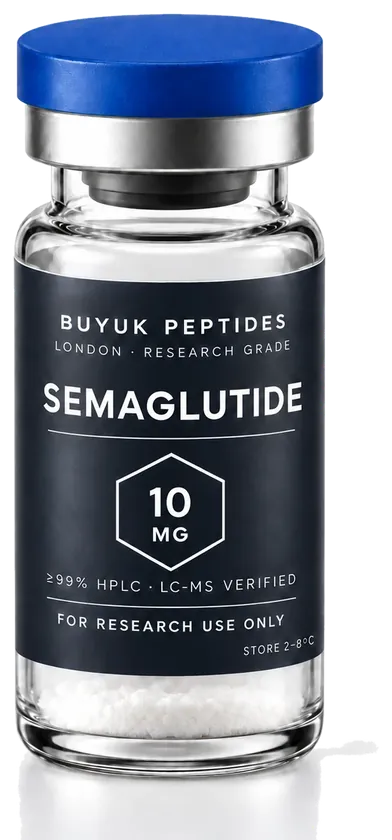
The incretin and amylin analogues are the most studied peptides in modern metabolic research. Each is a synthetic analogue of a gut or pancreatic hormone, modified to resist enzymatic breakdown and, in most cases, lipidated so that it binds serum albumin and persists for days rather than minutes. They differ chiefly in which receptors they engage, and that is the variable most laboratories are choosing between.
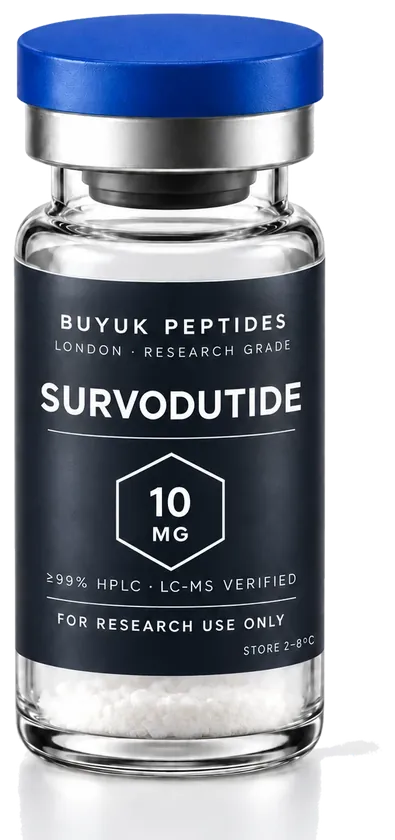
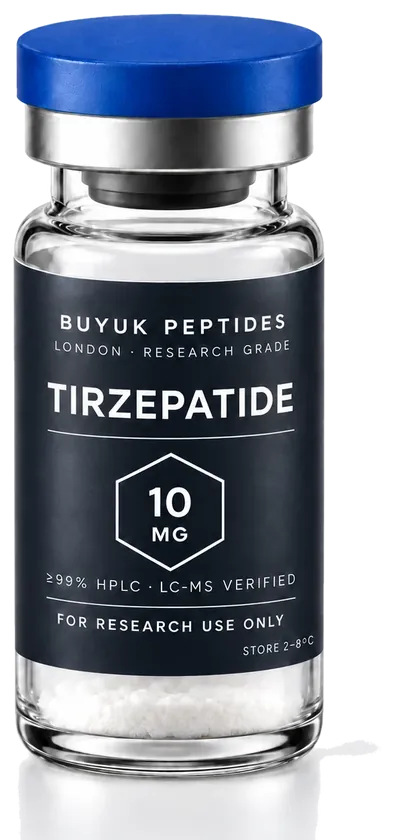
Semaglutide is the selective GLP-1 receptor agonist and the usual comparator. Tirzepatide is a GIP-based co-agonist at the GIP and GLP-1 receptors. Survodutide and mazdutide combine GLP-1 with glucagon receptor activity, and GLP-3 (retatrutide) engages all three. Cagrilintide is a long-acting amylin analogue, studied alone and alongside semaglutide.
For side-by-side reading, see semaglutide vs tirzepatide, tirzepatide vs GLP-3 and the four-compound family comparison. All are supplied as lyophilised research chemicals for in-vitro laboratory use only.
Questions
What separates the compounds in this class?
The receptors they act on. Semaglutide is a selective GLP-1 receptor agonist; tirzepatide adds the GIP receptor; survodutide and mazdutide pair GLP-1 with the glucagon receptor; GLP-3 (retatrutide) acts on all three; cagrilintide is an amylin analogue. The monographs and comparison guides set out the differences in detail.
Why do these peptides need careful handling?
Most carry a fatty-diacid side chain that binds albumin. The same chain makes them adsorb to ordinary plastic and nylon filters at low concentration, so low-binding tubes and PES or PVDF membranes are the usual practice. The storage and stability guide covers this.
How do I tell two of these apart on a certificate?
By the LC-MS identity line. Several elute close together on HPLC, but their molecular weights differ: about 4,114 Da for semaglutide, 4,813 Da for tirzepatide and 4,731 Da for retatrutide.