from£19.00View
Research class
GHRH, GHS & IGF analogues
Growth-hormone-releasing hormone analogues, growth-hormone secretagogues and an IGF-1 variant, studied across the growth-hormone axis. Every batch carries an independent HPLC purity and LC-MS identity certificate.
About this class
This class covers the compounds that act along the growth-hormone axis, from the hypothalamic signal down to the growth factor that mediates most of growth hormone's effects. Two receptor systems are involved upstream, and they are the main thing to understand when choosing between them.
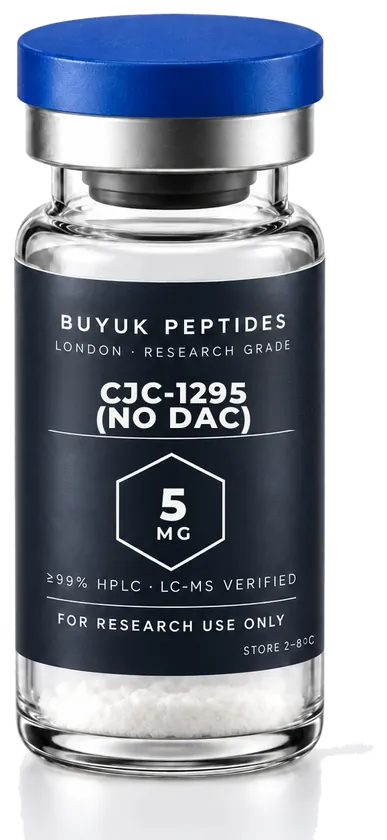
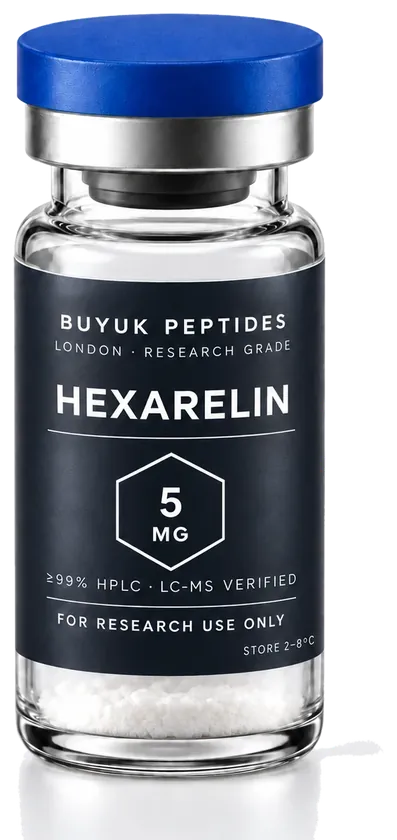
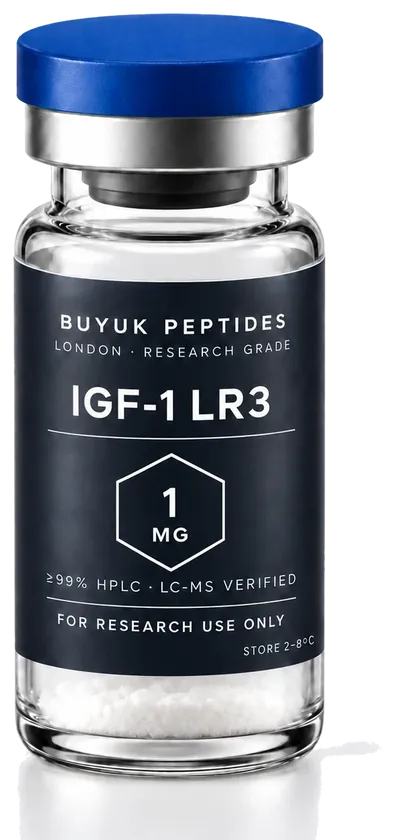
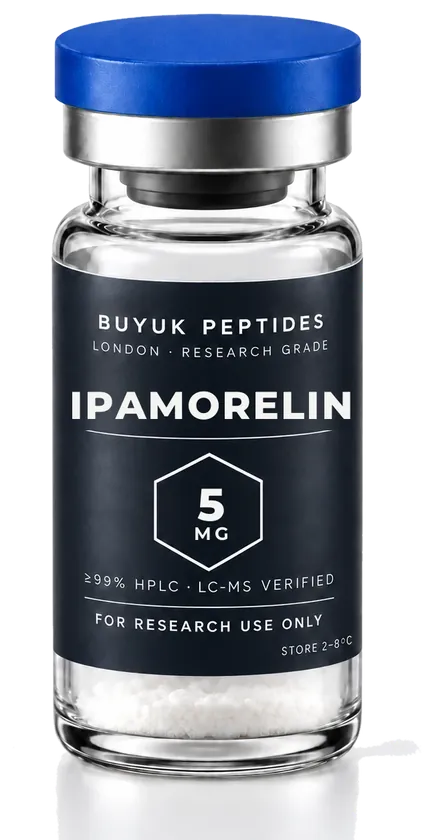
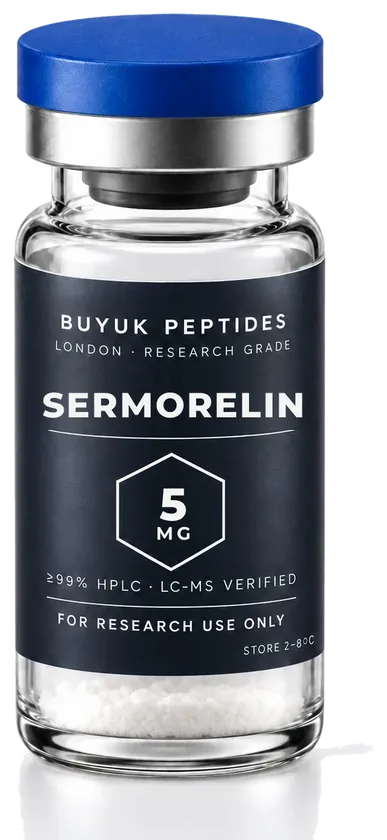
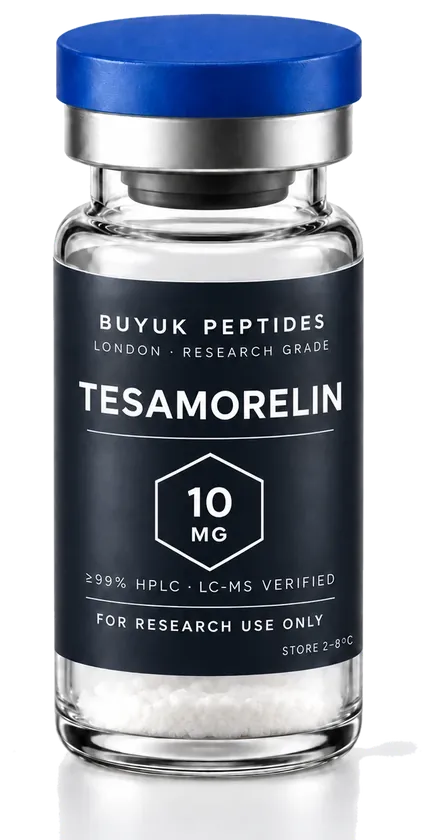
The GHRH receptor is targeted by sermorelin, the 1–29 fragment of native GHRH; tesamorelin, a stabilised full-length analogue; and CJC-1295 without DAC, a modified 1–29 analogue. The ghrelin receptor is targeted by ipamorelin, a selective pentapeptide, and hexarelin, a hexapeptide that also binds the scavenger receptor CD36. Downstream, IGF-1 LR3 is a recombinant IGF-1 analogue designed to escape the IGF-binding proteins.
The receptor distinctions are set out in sermorelin vs tesamorelin and ipamorelin vs CJC-1295. All are supplied as lyophilised research chemicals for in-vitro laboratory use only.
Questions
What is the difference between a GHRH analogue and a GHRP?
They act on different receptors. GHRH analogues such as sermorelin, tesamorelin and CJC-1295 act on the GHRH receptor; growth-hormone-releasing peptides such as ipamorelin and hexarelin act on the ghrelin receptor, GHS-R1a. The two signals are additive, which is why the classes are often studied together.
Is IGF-1 LR3 handled like the other peptides here?
No. It is an 83-residue recombinant protein with three disulphide bonds, made in E. coli rather than synthesised. It is reconstituted in dilute acid, aliquoted and frozen, and should not be kept in bacteriostatic water. Its monograph covers this.